
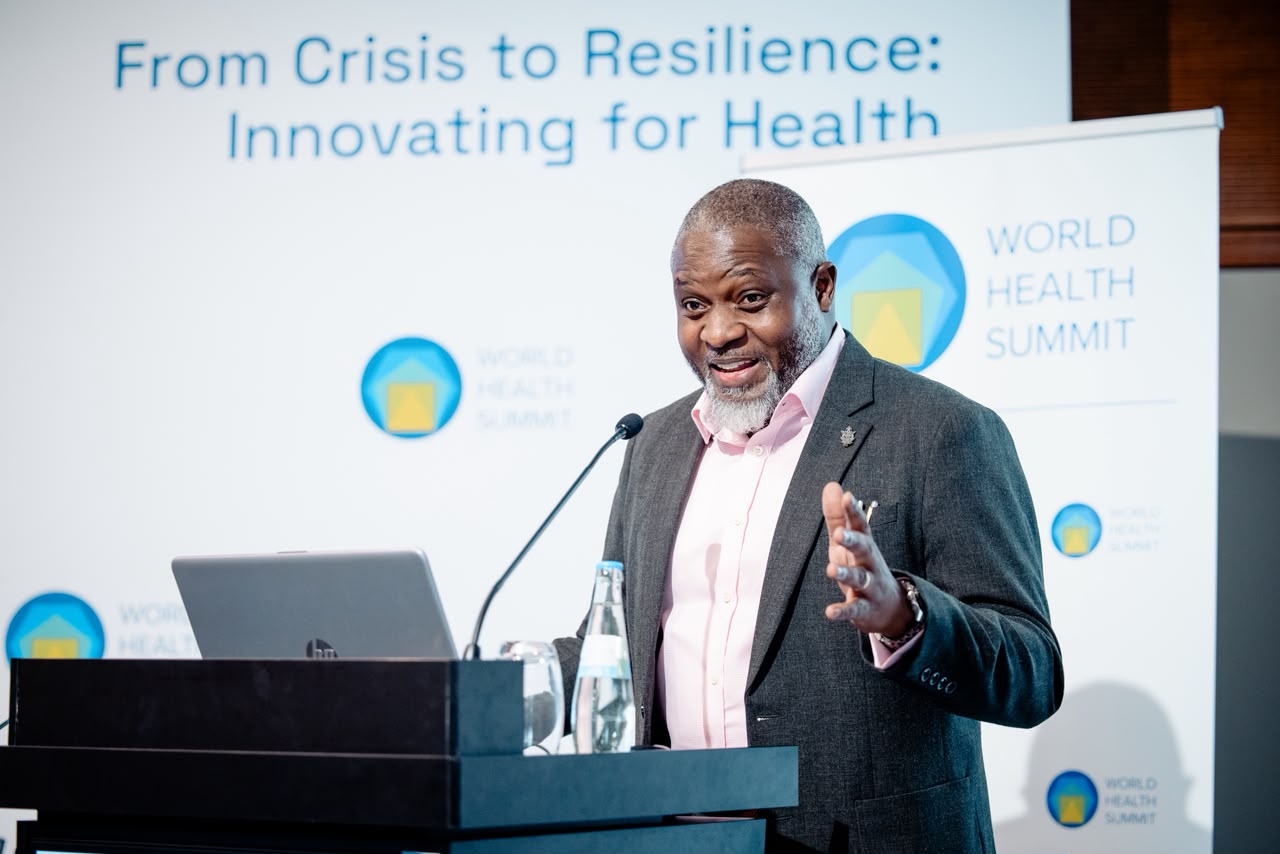
Prof. John H. Amuasi of the Kwame Nkrumah University of Science and Technology, Kumasi (KNUST) has called for a shift in how countries approach public health, urging governments to address the conditions that make people sick rather than focusing largely on treating diseases after they occur.
Speaking at the World Health Summit 2026 in Berlin, Germany, Prof. Amuasi said building stronger health systems would require greater attention to environmental, social and economic factors that put populations at risk.
His presentation, “One Health and Upstream Prevention”, formed part of a session titled “Ecological Determinants of Resilient Health Systems: Scaling Upstream Prevention to Anticipate, Prevent, and Adapt to Emerging Health Risks.”
Prof. Amuasi, who is also Co-Chair of The Lancet One Health Commission, used the example of people falling into a river to explain why health systems must pay greater attention to prevention.
He likened conventional healthcare responses to rescuing people who have already fallen into the water. While such interventions are necessary and save lives, he explained that it is equally important to find out why people keep falling in and prevent it from happening.
The approach, known as upstream prevention, focuses on addressing the underlying causes of poor health before they result in disease or other health emergencies.
For Prof. Amuasi, achieving this requires a better understanding of the relationship between human health, animal health and the shared environment.
Drawing on the work of the Lancet One Health Commission, he explained that health cannot be considered in isolation from the natural and social environments in which people live.
He highlighted how climate change, pollution, biodiversity loss and human activities affect health in ways that often extend beyond national borders and individual communities.
The One Health approach, he noted, provides a way to understand these connections and develop solutions that involve sectors beyond healthcare.
Using examples familiar to Ghana, Prof. Amuasi pointed to illegal mining, food safety and environmental pollution as issues that demonstrate why prevention must begin outside hospitals and health facilities.
He drew attention to the effects of environmentally destructive mining activities on water, soil and air, as well as questions about the safety and quality of food produced or sold under different environmental and regulatory conditions.
He also raised concerns about exposure to polluted air and the environmental implications of plastic packaging, highlighting how everyday decisions and economic activities can have consequences for health.
These challenges, he indicated, cannot be addressed by the health sector alone but require coordinated efforts involving environmental authorities, agriculture, education, industry and policymakers.
Beyond policy and environmental interventions, Prof. Amuasi placed particular emphasis on education and the need to change how people think about health.
He argued that introducing One Health concepts early in the educational system could gradually shape how future generations understand their responsibilities towards people, animals and the environment.
“If we are able to change the way people think about health and help them understand the fundamental interconnectedness of humans, animals and our shared environment, beginning at the earliest levels of education, from primary school through secondary school to university, I believe that in a decade or more, we will begin to reap the benefits,” he said.
He explained that this would help people appreciate the One Health concept regardless of their academic backgrounds or professional disciplines.
“This understanding can influence value systems, even as those values differ across societies and cultures,” he added.
Prof. Amuasi also highlighted the role of the media and other communication platforms in shaping public understanding of health and environmental issues.
He called for closer collaboration between scientists, educators and media professionals to ensure that information about health and the environment reaches people in ways they can understand and apply in their daily lives.
The presentation drew on the work of The Lancet One Health Commission, which advocates a broader understanding of health that considers the interconnected relationships between humans, animals, plants and the environment.
The Commission's framework places emphasis on equity, sustainability, systems thinking and the need to recognise different forms of knowledge when developing health policies.
According to Prof. Amuasi's message, while countries must continue investing in hospitals, medicines and emergency response systems, greater attention must also be given to preventing the conditions that lead to illness.


